
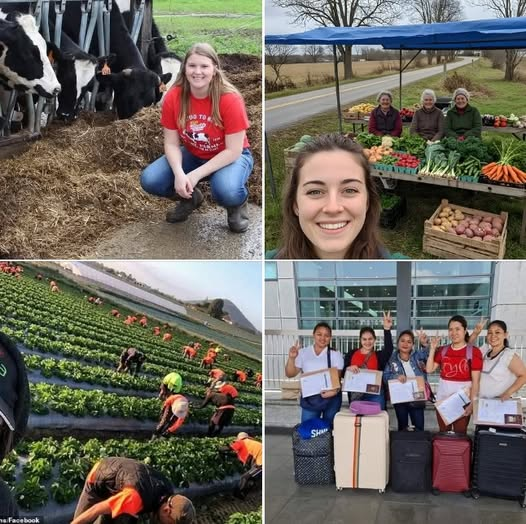
Imagine earning CHF 3,800 a month — that’s over $4,200 USD — picking grapes in the Swiss Alps, with your employer covering your housing, your flights, and your visa paperwork. This is not a fantasy. Thousands of foreign workers quietly do it every single year. And in 2026, more positions are open than ever. The question is: do you know how to get one?
In This Guide
Are You Eligible for the James Madison Graduate Fellowship?
Answer 8 quick questions and get a personalized eligibility report with your score, strengths, and next steps — in under 2 minutes.
Analyzing Your Eligibility...
Boost Your Application Score
Take our Advanced Quiz to uncover hidden strengths and get a full action plan to maximize your fellowship chances.
You're a Strong Candidate!
Based on both quizzes, you have a solid profile for fellowship and scholarship applications. Here's your action plan:
Your Top 5 Next Steps
- Why Switzerland? The surprising truth about farm salaries
- Who can apply — and who cannot
- Types of farm jobs available in 2026
- Exact salary ranges by role
- Top employers that sponsor visas
- How to apply — step by step
- Understanding the visa sponsorship process
- Deadly mistakes that get applications rejected
- Application timeline for 2026
- Frequently asked questions
Why Switzerland? The Truth About Farm Salaries That Nobody Talks About
Most people hear “farm job” and picture back-breaking labor for poverty wages. Switzerland flips that script entirely. Agricultural workers here are some of the best-paid in the world — not because Switzerland is generous by accident, but because the country’s cost of living demands it, and its labor laws enforce it.
But here’s what most job seekers don’t realize: Switzerland has a structural shortage of agricultural labor. The country’s own population simply isn’t large enough — or willing enough — to fill its farms each season. That gap is your opportunity.
Key facts:
Advertisements1
Find Your Best Opportunity in 30 Seconds
Answer 5 quick questions and we'll match you with the best scholarships, visas, and work opportunities for your exact profile.
🎯 Your Top Matches
Ranked by compatibility with your profile
- Minimum hourly wage for farm workers: CHF 22
- Over 50,000 agricultural workers needed annually
- 26 cantons each with farm job openings
- Typical visa processing time: 6–8 weeks
Switzerland produces world-famous wines, cheeses, fruits, and vegetables — all of which require human hands at key points in the season. And with the Swiss franc remaining one of the world’s strongest currencies, your earnings convert exceptionally well back home.
⚠️ But wait — there’s a catch. Switzerland has two completely different systems for EU citizens and non-EU citizens. Apply through the wrong channel and your application is automatically rejected before anyone even reads it. We’ll cover exactly which system applies to you — keep reading.
Who Can Apply — and Who Cannot
Switzerland’s immigration rules are layered, and understanding them before you apply is the single most important thing you can do. There are three distinct categories of applicants, and each has a different process.
EU / EFTA Citizens
If you hold a passport from an EU or EFTA country (Norway, Iceland, Liechtenstein), you have the easiest path. The Agreement on the Free Movement of Persons (AFMP) means you can work in Switzerland without needing a traditional work visa. You simply notify the cantonal authority and register within 90 days of arrival. Employers do not need to “sponsor” your visa in the traditional sense — but many still assist with housing and registration to attract good workers.
Non-EU / Non-EFTA Citizens (Third-Country Nationals)
This is where visa sponsorship becomes essential. If you hold a passport from Africa, Asia, the Americas, or any non-EU/EFTA country, your employer must formally sponsor your work permit before you can legally work in Switzerland. The permit is called a Type B (long-term) or Type L (short-term seasonal) residence permit.
⚠️ Important: The Admission of Third-Country Nationals Rule Switzerland operates a strict annual quota system for non-EU workers. Employers must prove they could not find a suitable EU/EFTA candidate first. This is called the domestic labor market priority check — and it means your employer must really want YOU specifically. Strong skills, prior agricultural experience, and language ability dramatically improve your chances.
What You Must Have to Qualify
✅ A valid passport with at least 6 months validity beyond your planned stay ✅ A confirmed job offer from a Swiss farm willing to sponsor your permit ✅ Proof of relevant agricultural experience (even informal experience counts) ✅ Basic communication in German, French, or Italian (depending on canton) ✅ Clean criminal record (police clearance certificate required) ❌ No prior Swiss immigration violations or overstays
Types of Farm Jobs Available in 2026
Switzerland’s agricultural sector is more diverse than most people imagine. It isn’t just vineyards — though those are plentiful. Here’s a breakdown of the main categories hiring foreign workers in 2026.
🍇 Viticulture (Grape Harvesting & Vineyard Work)
The Swiss wine regions — Valais, Vaud, Geneva, and Graubünden — are consistently among the highest-demand areas for farm labor. Peak hiring runs from late August through October. Roles include pruning, training vines, harvesting, and cellar support. These jobs often include accommodation on or near the estate.
🍎 Fruit & Vegetable Harvesting
Cantons like Aargau, Thurgau, and Bern are Switzerland’s fruit basket. Apple, pear, cherry, and berry operations hire heavily from March through November. The work is seasonal but often renewable year after year if you perform well — many farms build long-term relationships with trusted foreign workers.
🐄 Livestock & Dairy Farming
This is the hidden gem of Swiss farm employment. Dairy farms require year-round stable hands, milkers, and animal health assistants. The pay is higher, the contract length is longer (typically 12 months), and sponsorship is more common because farms cannot rely on seasonal workers for this role.
🌱 Greenhouse & Horticulture
Switzerland has a thriving commercial greenhouse sector producing herbs, flowers, and vegetables year-round. These jobs are indoor, physically lighter, and available in all seasons — making them particularly attractive for those new to agricultural work.
📌 Coming up — the salary numbers: The next section reveals exactly how much each role pays, broken down by canton. One particular role pays nearly CHF 5,000 a month — and it’s not the one most people apply for.
Exact Salary Ranges by Role — 2026 Data
Switzerland sets minimum agricultural wages by collective labor agreement (CLA). But many farms pay above the minimum — especially when they need experienced workers and are willing to sponsor visas. Here’s the current salary landscape.
| Job Role | Monthly Salary (CHF) | Season | Visa Sponsor? |
|---|---|---|---|
| Grape Harvester | CHF 3,200 – 3,800 | Aug – Oct | Yes |
| Fruit Picker | CHF 3,000 – 3,500 | Mar – Nov | Yes |
| Dairy Farm Worker | CHF 3,800 – 4,600 | Year-round | Yes |
| Farm Manager / Supervisor | CHF 4,500 – 6,200 | Year-round | Yes |
| Greenhouse Technician | CHF 3,400 – 4,100 | Year-round | Yes |
| Agricultural Machinery Operator | CHF 4,000 – 5,200 | Mar – Nov | Selective |
| Cheese / Dairy Processor | CHF 3,600 – 4,400 | Year-round | Yes |
“A dairy worker in canton Bern can earn more than a software developer in many European capitals — and housing is often included.”
Important note: many farms also provide free or subsidized accommodation, meals, and transport to and from the fields. When you factor this in, the effective value of the package rises significantly — often by CHF 800–1,200 per month above the base salary.
Top Employers That Sponsor Visas in 2026
Not all Swiss farms can sponsor foreign workers. Only those registered with cantonal labor authorities and meeting quota requirements can do so. These are the categories and regions where sponsored opportunities are most concentrated.
Valais Vineyards Network — Canton Valais A cooperative of 200+ wine estates. Seasonal visa sponsorship for harvesters and vine technicians annually.
Swiss Dairy Farms AG — Cantons Bern & Fribourg Year-round dairy and livestock operations. Among Switzerland’s largest employers of sponsored foreign workers.
Thurgau Fruit Growers Association — Canton Thurgau Represents 350+ orchards. Seasonal visa coordination service for member farms each spring.
Agri-Geneva Collective — Canton Geneva Vegetable, herb, and flower operations near Geneva. French-language requirement; full-year contracts available.
Graubünden Highland Farms — Canton Graubünden Mountain agri-tourism farms combining livestock work with eco-tourism. Unique working environment.
Aargau Greenhouse Cooperatives — Canton Aargau Large-scale commercial greenhouses. Year-round indoor horticulture roles; beginner-friendly.
✅ Pro Tip: Switzerland’s official agricultural job portal — agriportail.ch — lists verified farms actively seeking foreign workers. Many listings explicitly state whether visa sponsorship is available. This is the most reliable starting point for your search.
How to Apply — Step by Step
This is where most applicants either succeed or fail — not because of their qualifications, but because of process errors. Follow these steps exactly.
Step 1 — Build a farm-specific CV Your CV must highlight agricultural experience above everything else — even if it was informal. Swiss farm owners scan applications in under 90 seconds. Lead with hands-on skills: animal care, machinery, harvesting, irrigation. Include a professional photo (standard in Swiss applications) and write a short cover letter in the language of the canton you’re targeting.
Step 2 — Identify target farms and contact them directly Don’t only rely on job boards. Swiss farm owners respond far better to direct, personalized outreach. Use agriportail.ch, cantonal agricultural office directories, and LinkedIn to find decision-makers. A hand-written email to the farm owner outperforms a generic online application by a wide margin.
Step 3 — Secure a written job offer with visa sponsorship commitment This document is the foundation of your entire visa application. It must state your role, salary, accommodation arrangements, and the employer’s commitment to sponsor your work permit. Without this, the Swiss migration authority will reject your visa application outright.
Step 4 — Employer submits the labor market test (for non-EU applicants) Your Swiss employer must apply to the cantonal labor authority to confirm no suitable EU/EFTA candidate was available. This typically takes 2–4 weeks. You cannot skip or rush this step — it is legally mandatory.
Step 5 — Apply for your work visa at the Swiss embassy Once the labor market test is approved, your employer submits the permit application to the cantonal migration office. Simultaneously, you apply for a Swiss national visa (Type D) at the nearest Swiss embassy in your home country. You’ll need: passport, job offer letter, permit approval, police clearance, proof of accommodation, and biometric photos.
Step 6 — Receive your permit and book your travel Once issued, your Type L or Type B permit is valid for the duration agreed with your employer. On arrival in Switzerland, you must register with the local residents’ office (Einwohnerkontrolle) within 14 days. Your employer typically helps with this process.
Understanding the Visa Sponsorship Process in Detail
The Swiss visa sponsorship process has two parallel tracks running simultaneously — one handled by your employer in Switzerland, and one handled by you at home.
The Employer’s Track (in Switzerland)
Your employer applies to the cantonal labor and migration authority. The authority checks that the job is genuine, the salary meets the CLA minimum, and that the labor market test was conducted. If approved, they issue a work permit authorization — this is what unlocks your ability to apply for the visa.
Your Track (in your home country)
While the employer handles their side, you gather all personal documents — passport, criminal record clearance, medical insurance proof, educational certificates if relevant, and any reference letters from previous employers. The Swiss embassy in your country will review both sets of documents together before issuing your visa.
🚫 Never travel to Switzerland before your visa is issued. Some applicants assume they can enter on a tourist visa and convert it to a work permit once there. This is illegal and will result in deportation and a multi-year ban. Always wait for your permit before traveling.
How Long Does It Take?
- Week 1–2: Employer submits labor market test to cantonal authority
- Week 3–5: Labor market test result received; employer submits permit application
- Week 4–6: You submit your visa application at Swiss embassy with all documents
- Week 7–10: Visa/permit approved; collection at embassy or consulate
- Week 11–12: Travel to Switzerland; register with local residents’ office within 14 days
7 Deadly Mistakes That Get Applications Rejected
Every year, thousands of qualified candidates lose their shot at a Swiss farm job not because of who they are, but because of what they did wrong in the application process.
❌ Applying without a confirmed job offer. You cannot get a Swiss work permit on your own. The permit application must come from your employer, not you. Many applicants waste months applying to the migration authority directly — this achieves nothing.
❌ Using a generic, office-style CV. Swiss farm employers are practical people. They want to see dirty boots and real experience. A CV that leads with a “professional summary” and lists Microsoft Office skills will be discarded immediately.
❌ Applying too late. For seasonal positions — especially harvest — Swiss farms begin recruiting 4–6 months in advance. Apply in April for summer roles, July for autumn harvest roles.
❌ Ignoring the language requirement. Even basic German, French, or Italian makes an enormous difference. Farms must communicate safety instructions — employers won’t take on a worker they can’t communicate with.
❌ Submitting incomplete visa documents. A single missing document — even just a missing signature on the police clearance — sends your application to the back of the queue or results in outright rejection. Use a checklist and verify every document twice.
❌ Trusting unverified job agencies. There are fraudulent agencies that claim to arrange Swiss farm job visas for a fee. Swiss employers do not charge placement fees. If any agent asks for money upfront to “secure” your placement, walk away.
❌ Assuming the same process as other European countries. Switzerland is not in the EU. Its rules are entirely its own. What works for Germany, France, or the Netherlands does NOT automatically apply here.
2026 Application Timeline — When to Apply for Each Season
| Season / Role | Work Period | Apply By | Region |
|---|---|---|---|
| Pruning & Vine Training | Jan – Mar | October 2025 | Valais, Vaud, Geneva |
| Spring Fruit Harvesting | May – Jul | January – February 2026 | Thurgau, Aargau |
| Summer Vegetable Harvest | Jun – Sep | February – March 2026 | Bern, Fribourg |
| Grape Harvest (Vendange) | Sep – Oct | May – June 2026 ⚡ Apply Now | All wine cantons |
| Apple & Pear Harvest | Aug – Nov | April – May 2026 | Thurgau, Graubünden |
| Dairy / Livestock (Year-round) | Jan – Dec | Anytime — 3 months ahead | All cantons |
⏳ Act Now for the Grape Harvest 2026. The September–October grape harvest is currently accepting applications. Permit processing takes 8–12 weeks. If you want to be there in September, your application window is right now.
Frequently Asked Questions
Can foreigners get farm jobs in Switzerland in 2026? Yes. Switzerland actively recruits foreign agricultural workers, especially for seasonal roles. EU/EFTA citizens can apply directly; non-EU citizens must secure a sponsored work permit through their employer. Thousands of non-EU nationals work on Swiss farms legally each year.
What is the minimum salary for farm workers in Switzerland? The minimum monthly wage for agricultural workers is CHF 3,200–3,500 (approximately $3,500–$3,900 USD) depending on the canton and role. Many farms pay above this, and accommodation is often included, further increasing the total package value.
Do I need to speak Swiss German to work on a farm? It depends on the canton. German-speaking cantons (Zurich, Bern, Aargau) expect basic German. French-speaking cantons (Geneva, Vaud) expect basic French. Italian-speaking Ticino expects Italian. Even a basic working knowledge of the regional language dramatically improves your chances of being hired.
How long does the visa sponsorship process take? Typically 8–12 weeks from the employer’s permit application to your visa issuance. Plan to submit all documents at least 12–14 weeks before your intended start date to have a comfortable buffer.
Can I bring my family with me on a farm work visa? It depends on your permit type. Type B (long-term, 12+ months) permits generally allow family reunification after a qualifying period. Type L (short-term seasonal) permits typically do not. Confirm the specific rules with the cantonal migration authority.
Is housing always provided by Swiss farms? Not always, but very commonly — especially for seasonal roles. Farms that recruit internationally almost always provide on-site or nearby accommodation. Always confirm the accommodation arrangement before accepting any job offer.
Can I renew my work permit and stay longer? Yes. Type L seasonal permits can often be renewed for successive seasons if your employer rehires you. Type B permits can be renewed annually. After 5 years of continuous legal residence in Switzerland, you may be eligible to apply for a C permit (permanent residence).
Where are the best websites to find Swiss farm jobs with visa sponsorship? The most reliable sources are: agriportail.ch (official Swiss agricultural job portal), jobs.ch, jobagrar.ch, and the websites of cantonal agricultural offices. For direct farm outreach, search the Swiss Farmers’ Union (SBV) member directory.
This article is for informational purposes only. Always verify visa requirements with the official Swiss State Secretariat for Migration (SEM) at sem.admin.ch.